Reliably assess the efficacy of your human-specific CCR8-targeting antibodies for Treg depletion with our humanized CCR8/CCL1 models
A functional CCR8-CCL1 pathway is essential for translatable results, as it’s been shown that mouse CCR8 does not cross-react with human CCL1:
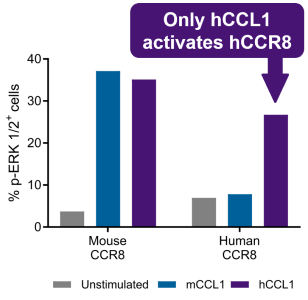
Figure 1 : Activation of the CCR8/CCL1 pathway leads to phosphorylation of ERK2. Only human CCL1 activates human CCR8, leading to an increase in ERK2 phosphorylation.
CCR8/CCL1 interaction has been reported to trigger:
- CCR8 upregulation in Tregs and enhancement of Treg activity
- Tregs addressing to sites of antigen presentation in secondary lymphoid tissues and inflamed areas
- STAT3-dependant up-regulation of FOXP3, CD39, IL-10 and Granzyme B
Thus, only humanizing CCR8 could result in impaired CCR8 and granzyme B upregulation and altered Treg migration to secondary lymphoid tissues and to the tumor microenvironment (TME).
This is why we created the genO-hCCR8/hCCL1, a model in which it has been demonstrated that you can test the efficacy of your human-specific CCR8 antibodies:
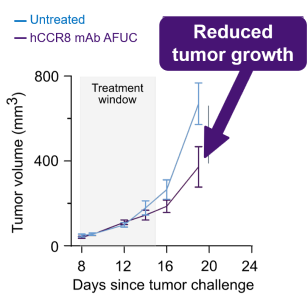
Figure 2: Treatment of genO-hCCR8/hCCL1 tumor bearing mice with an anti-CCR8 monoclonal antibody leads to significant tumor growth inhibition.
Find out more about this data in the poster we presented at the SITC 2025 conference.
If you’d like more information regarding the genO-hCCR8/hCCL1 model, you can find it below:

Testing an antibody targeting human CCR8 with a Fc-competent domain?
You might not be capturing the contribution of the effector function of your antibody if you are not using a model with humanized Fcγ receptors.
We crossed our genO-hCCR8/hCCL1 model with the extensively validated genO-hFcγR model, to enable you to test antibodies with an Fc competent domain and acquire a more complete and translatable readout of the efficacy of your therapeutic.
This is a unique model, featuring:
- A human-like expression pattern of hFcγ receptors and of hCCR8 and hCCL1
- Functional receptors, enabling assessment of Fc-mediated effector functions
- Functional CCR8/CCL1 signaling axis
- No expression of murine FcγR
- A fully functional mouse immune system

We also have other models available for testing Treg-depleting therapeutics:

Ensure the translatability of efficacy studies for CCR8 therapeutics
Get in touch about
Let us know how we can help

Scientific excellence
From model design to experimental results
Featured in 600+ scientific articles

Collaborative approach
Collaboration with 17 Top Pharmas,
170+ Biotechs and 380+ Academic Institutions

Robust validation data on catalog models
Generated with biopharma partners and in-house

Innovative technologies
and guaranteed freedom to operate

Easy access to models
Models with certified health status from professional breeders in US and Europe