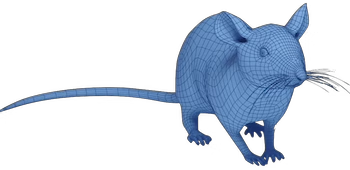
The study establishes a cross-species cellular atlas of Fcγ receptor expression and introduces humanized mouse models enabling improved translational antibody testing. Human Fcγ receptors were knocked in to replace murine counterparts, and a second model combined these with human FcRn. These models enable the physiological interaction of human IgG with effector cells and the translational assessment of antibody pharmacokinetics.

Humanized FcγR mice reproduced human-like receptor expression across immune subsets. The FcγR/FcRn model enabled accurate assessment of IgG effector function and pharmacokinetics, improving prediction of therapeutic antibody activity.

Humanized FcγR Knockin mouse and Humanized FcγR/FcRn double Knockin mouse — genOway-developed
Antibody modeling, Fc receptor biology, immuno-oncology, therapeutic antibody development, Fc engineering, translational pharmacology
Replacement of murine Fcgr loci by human FcγR genes, additional Knockin of human FcRn, immune cell phenotyping across tissues, antibody binding and effector function assays, pharmacokinetic studies

From model design to experimental results
Featured in 600+ scientific articles

Collaboration with 17 Top Pharmas,
170+ Biotechs and 380+ Academic Institutions

Generated with biopharma partners and in-house

and guaranteed freedom to operate

Models with certified health status from professional breeders in US and Europe
.avif)