Antibody delivery across the BBB
Mouse models with physiological expression of human TFRC to assess drug delivery across the BBB

Mouse models with physiological expression of human TFRC to assess drug delivery across the BBB
Developing therapeutic antibodies for CNS conditions remains highly challenging. Despite advances in transferrin receptor (TFRC or CD71)-mediated delivery, evaluating antibody transport across the blood-brain barrier (BBB) is still limited by poor translatability of standard preclinical models, leading to uncertainty in CNS exposure and efficacy.
genO-hTFRC mice enable reliable in vivo efficacy assessment of CNS-targeting antibodies, by providing physiological expression of humanized TFRC in relevant tissues, such as bone marrow and blood. This allows you to better evaluate BBB crossing strategies and confidently advance your therapeutic candidates.

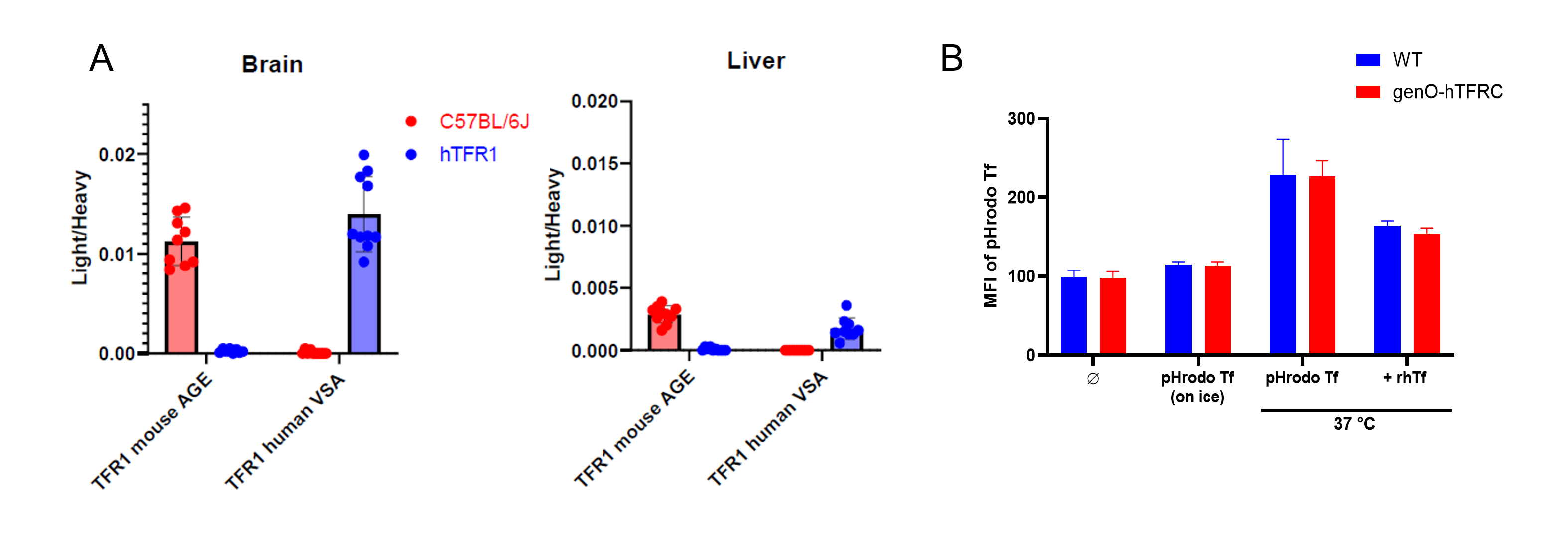
genO‑hTFRC mice express human TFRC in the brain and liver (Figure 1A), while preserving normal iron regulation and transferrin internalisation (Figure 1B) comparable to wild‑type mice.
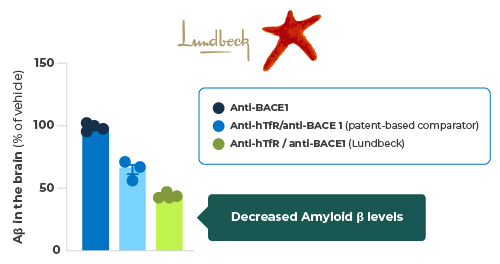
The model enables robust profiling of antibodies targeting human TFRC and designed for BBB transport (Figure 2), supporting translational evaluation of CNS delivery strategies, which was validated by Lundbeck, and presented at the AACR 2024:

Combined with genO-hFcγR and genO-hSA/hFcRn intercrosses, these models allow reliable evaluation of Fc-engineering strategies, helping you balance BBB transport, efficacy and antibody half-life with greater translational confidence:



From model design to experimental results
Featured in 600+ scientific articles

Collaboration with 17 Top Pharmas,
170+ Biotechs and 380+ Academic Institutions

Generated with biopharma partners and in-house

and guaranteed freedom to operate

Models with certified health status from professional breeders in US and Europe