Humanized FcRn and HSA mouse models with physiological expression for translational PK studies
Predictive assessment of antibody half-life extension
A mouse model with physiologically relevant FcRn biology, validated by leading biopharma and academic teams
Optimizing the half-life of antibodies and albumin-binding therapeutics requires preclinical models that faithfully reproduce human antibody recycling biology, with a physiological expression of hFcRn and human albumin. The genO-hSA/hFcRn mouse model was specifically developed to address this need and has been extensively used by biopharmaceutical and academic teams including GSK, Novo Nordisk, Crescendo Biologics, Aarhus University and Crown Bioscience leading to multiple peer-reviewed publications.
A model designed for translational PK confidence
The genO-hSA/hFcRn mouse combines human FcRn knock-in at the endogenous mouse locus with human serum albumin (hSA) expression. This ensures physiological regulation, tissue distribution and FcRn-mediated recycling while avoiding non-physiological competition from mouse albumin, which has a higher affinity for human FcRn.
This means:
More reliable evaluation of FcRn driven half life extension strategies
Improved translational relevance for antibody, albumin binding and fusion formats
Reduced risk when progressing PK optimized candidates towards the clinic
Guide: Compare FcRn mouse models and identify the best fit for your antibody PK/PD studies. Read the guide →
Published evidence across multiple therapeutic modalities
The translational value of the genO‑hSA/hFcRn model is supported by diverse publications:
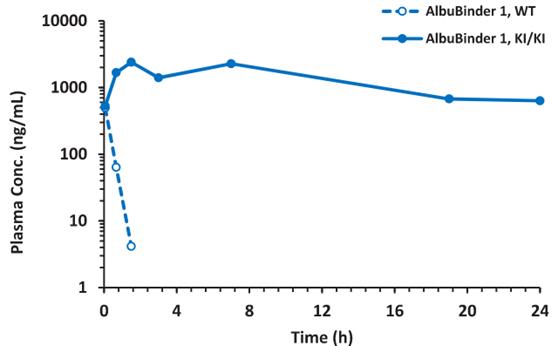
GSK demonstrated significant in vivo half‑life extension by conjugating a BMP1/TLL inhibitor to a small‑molecule human serum albumin binder, enabling sustained exposure in mice (Vantourout et al., 2021).
Figure 1 – PK profile of AlbuBinder in either WT mice or HSA mice.
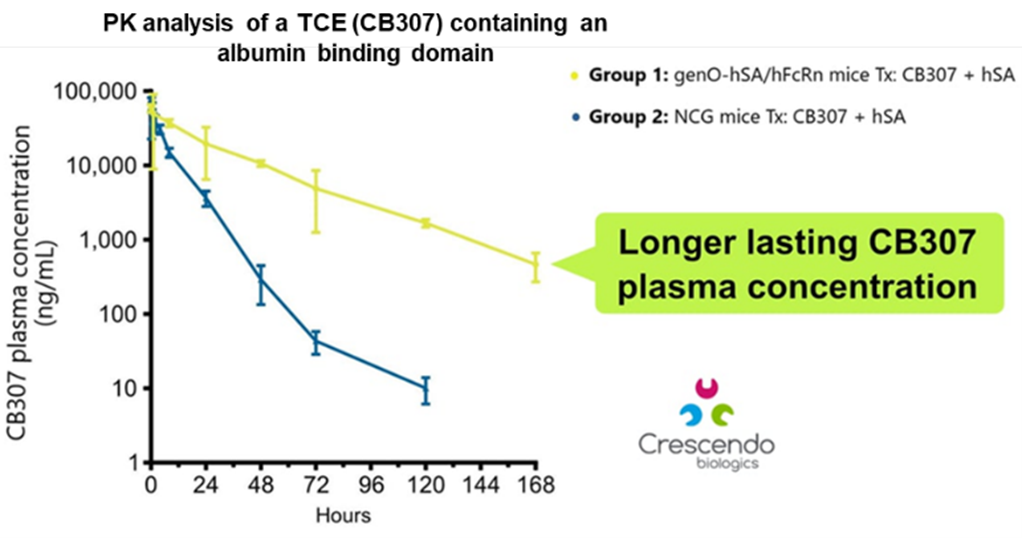
Crescendo Biologics used the model to evaluate CB307, a trispecific Humabody® therapeutic targeting PSMA, CD137 and HSA, showing extended half-life (Archer et al., 2024).
Figure 2 - PK analysis of a T-cell engager (CB307) in genO-hSA/hFcRn vs NCG mice, treated with exogenous human albumin.
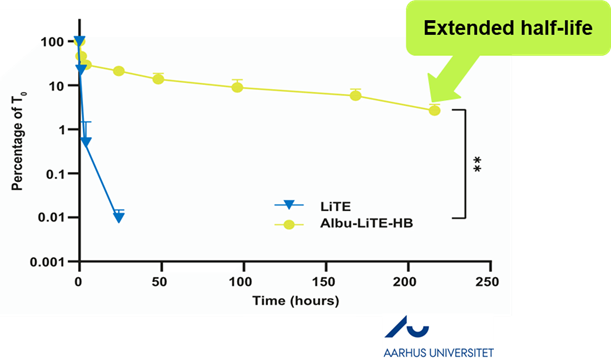
Aarhus University reported tunable half-life extension and enhanced anti tumor efficacy using bispecific T-cell engager–albumin fusion proteins with engineered FcRn affinity (Mandrup et al., 2021).
Figure 3 - PK analysis of light T-cell engager (LiTE) and LiTE fused to an albumin sequence with high affinity to FcRn (Albu-LITE-HB).
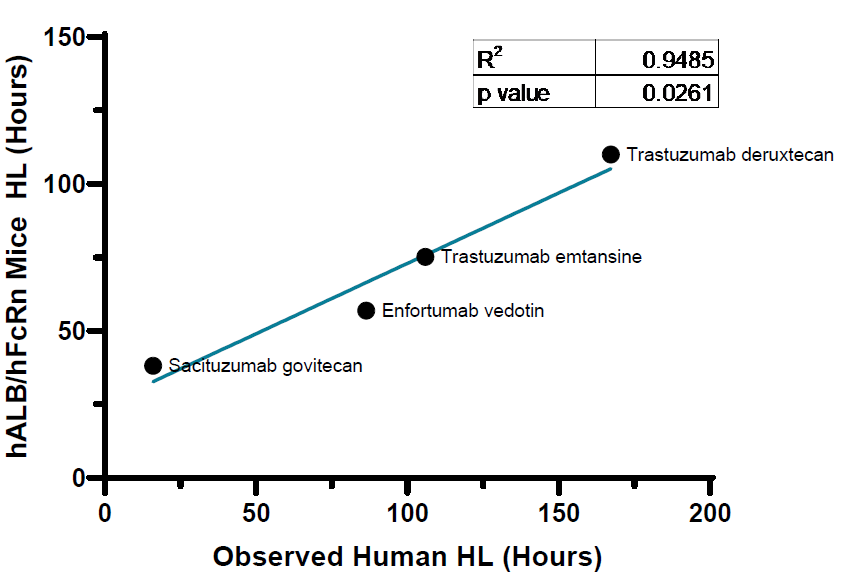
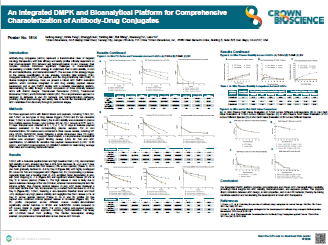
Crown Bioscience recently demonstrated that the genO-hSA/hFcRn is a highly predictive model for the half-life of antibody-drug conjugates (ADCs) in humans. The strong correlation between the PK in genO-hSA/hFcRn mice and both human and NHP data suggests that this model could be used as an alternative to NHP studies in ADC development (Feng et al., poster at AACR 2026).
Figure 4 - Correlation analysis of the half-life of 4 antibody-drug conjugates (ADCs) in genO-hSA/hFcRn model vs humans.
Extending beyond half-life: Integrated PK and effector function
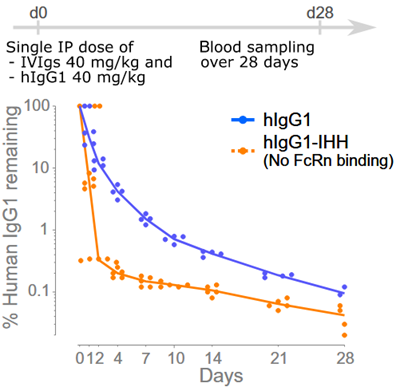
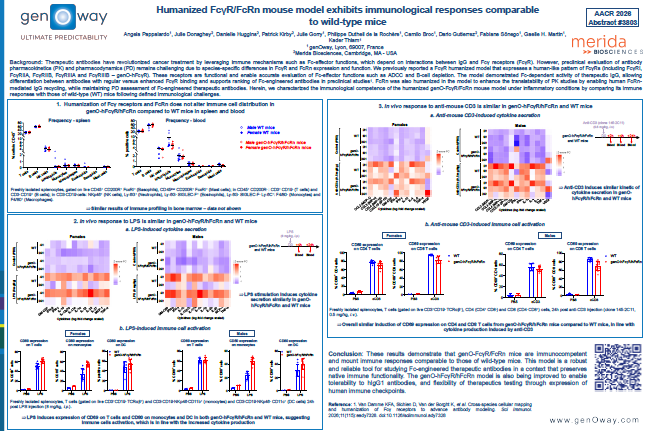
For programs requiring deeper characterization, the genO-hFcγR/hFcRn model enables accurate assessment of both pharmacokinetics and IgG effector function, as demonstrated in a Science Immunology paper by VIB (Van Damme et al., 2026).
Figure 5 - Levels of monospecific IgG1 (%) with or without abrogated binding to FcRn in genO-hFcγR/hFcRn mice.
Why choosing our PK mouse models
Physiological human FcRn and albumin expression
Peer reviewed evidence across antibodies, Humabodies®, albumin binders and fusion proteins
Trusted by leading biopharma and academic teams
Designed to support confident PK optimization and translational decision making
Portfolio of PK models
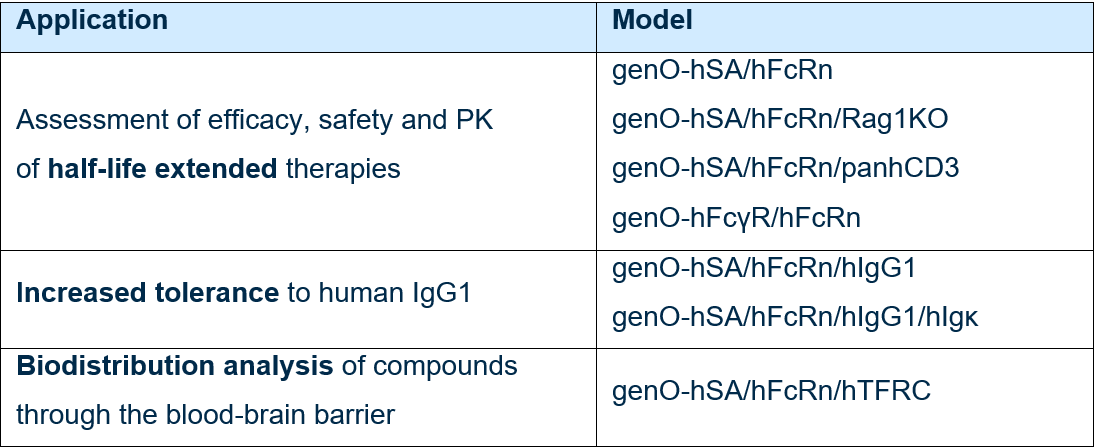
In order to expand the range of applications of our PK models, we have generated mouse models in which multiple parameters can be simultaneously assessed:
Vantourout et al., 2021, In Vivo Half-Life Extension of BMP1/TLL Metalloproteinase Inhibitors Using Small-Molecule Human Serum Albumin Binders - Albumin (Alb) Knockin | Publication | genOway