.avif)


前臨床モデル選定における遺伝子設計の重要性:心血管疾患の前臨床モデルに焦点を当てて――BMPR2に関する事例研究
前臨床データの再現性を高め、臨床への応用可能性を高めるためには、動物モデルの選択が鍵となります。しかし、すべてのモデルが同等に優れているわけではないため、具体的な研究課題を明確にし、選択したモデルがその目的に適していることを確認することが極めて重要です。 長年にわたり、マウスはラットよりも開発が容易で経済的であるため、生物医学研究において好まれるモデルとされてきました。しかし、CRISPR/Cas9などの技術の登場により状況は一変し、ラットは再び、特に患者で観察される表現型をより忠実に再現できる疾患をはじめ、多種多様な疾患の研究において、第一選択となる実験動物となっています。1,2

肺動脈性高血圧症(PAH)もその一例であり、これは肺の微小動脈の壁が変形・肥厚することで生じる、進行性の希少疾患であり、肺内の血圧上昇を引き起こします(その名の通り)。 興味深いことに、患者の約75~80%は特発性PAH(すなわち、病因不明)を発症する一方、残りの15~20%は、主に骨形態形成タンパク質受容体II型(Bmpr2)をコードする遺伝子のヘテロ接合性生殖細胞系列変異に関連する遺伝性のPAHを患っています。3BMPR2の機能喪失または発現低下はいずれもPAHの発症に十分であると考えられるが、Bmpr2のコード配列内で同定される変異の種類によって、疾患の重症度は異なる。すなわち、タンパク質の欠失を引き起こす変異は、発現を阻害する変異よりも重篤な症状を引き起こす。4
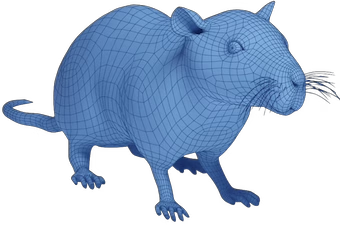
これまで、研究者たちは、PAHに関連するさまざまなBMPR2変異の機能的影響を研究するために、いくつかのマウスおよびラットモデルを構築してきた。その結果、現在では、Bmpr2コンディショナル ノックアウト(KO)マウスやラット、さらにはタンパク質の截断型を保有するマウスなど、PAHのさまざまな齧歯類モデルが利用可能となっている。 しかし、そのすべてが適切な前臨床モデルであるとは限らない。Bmpr2ノックアウト(KO)ラットでは、著しい肺血管リモデリングを伴う中等度のPAHが発症し、ヒト患者で観察される所見をより忠実に再現している。5–7
このモデルの翻訳可能性が最適化されていることに加え、ラットの体サイズが大きいといった固有の特性も相まって、これらの動物はPAHの理解を深めるだけでなく、この疾患の他の遺伝子改変モデルを構築する上でも極めて貴重なツールとなっています。1遺伝子改変ラットの開発における先駆者であるgenOway社8は、関連する前臨床モデルの設計・製造における数十年にわたる専門知識を活かし、科学界に革新的なラットモデルを提供しています。
参考文献:
- Chenouard, V. ほか. ゲノム編集の進展と遺伝子改変ラットモデルの構築への応用.Front. Genet.12, 615491 (2021).
- Meek, S., Mashimo, T. & Burdon, T. 「ラットゲノムの設計から編集へ」。『 Mamm Genome』 28, 302–314 (2017).
- Gräf, S. ほか. 遺伝性肺動脈性高血圧症の根底にある希少な塩基配列変異の同定.Nat Commun9, 1416 (2018).
- Rudarakanchana, N. 「原発性肺高血圧症の根底にある骨形成タンパク質II型受容体変異の機能解析」。『Human Molecular Genetics』11、1517–1525 (2002)。
- Gomez-Arroyo, J. ほか. 肺動脈性高血圧症のマウスモデルに関する概要:課題と展望.American Journal of Physiology-Lung Cellular and Molecular Physiology302, L977–L991 (2012).
- Ranchoux, B. ほか. 肺高血圧症における内皮細胞から間葉系細胞への分化転換.Circulation131, 1006–1018 (2015).
- Hautefort, A. ほか. Bmpr2 変異ラットは肺動脈性高血圧症の肺および心臓の特徴を示す。Circulation139, 932–948 (2019).
- Zhou, Q. et al. 「卵子の活性化の制御による生殖能力を有するクローンラットの作製」。『Science』 302, 1179–1179 (2003)。

卓越した科学
モデル設計から実験結果まで
600件以上の科学論文で取り上げられています

協調的なアプローチ
大手製薬企業17社、
、170社以上のバイオテクノロジー企業、および380以上の学術機関との提携

カタログモデルに関する信頼性の高い検証データ
バイオ医薬品分野のパートナー企業および 社内リソースを用いて生成

革新的な技術
および実施の自由が保証される

モデルへの容易なアクセス
米国および欧州の専門ブリーダーから、健康状態が認定された個体