

Applications of the genO‑hFcγR mouse model
Broad range of applications in the fields of immuno-oncology, infectious diseases, inflammation and autoimmunity:
- Assess the Fc-mediated effector function of biologics:
- Evaluation of B-cell depletion following treatment with anti-CD20 antibodies
- Testing the protective role of antibodies in the context of infection, such as influenza
- Ex vivo assessment of antibody-dependent cellular cytotoxicity (ADCC) induced by different monoclonal antibodies
- Rank Fc-engineered antibodies with enhanced or reduced binding to FcγR
- Gain insight into the mechanism of action (MOA) of biologics
- Analyze the biodistribution of hFcγR-targeting compounds and activated effector cells
- Suitable for toxicological assessments, including those relating to reproductive toxicity, as an alternative to non-human primate (NHP) models.
Features
- Fully immunocompetent model
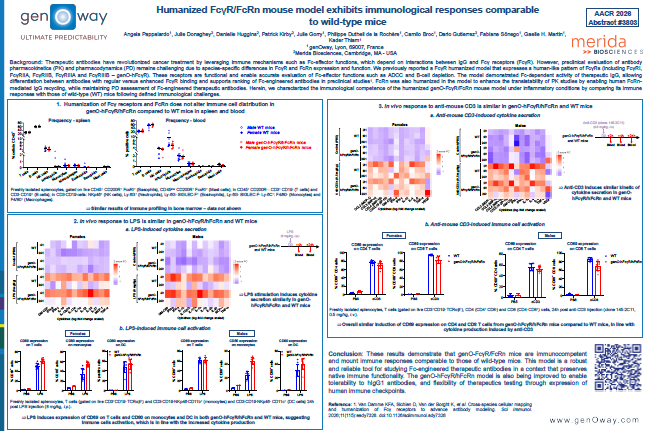
- genO‑hFcγR mice have a human-like expression pattern
- Expression of the following humanized receptors: FcγRI (CD64), FcγRIIA (CD32A), FcγRIIB (CD32B), FcγRIIIA (CD16A), FcγRIIIB (CD16B)
- No expression of murine FcγR
- Functional receptors enabling assessment of Fc-mediated effector functions
The genO‑hFcγR model builds on a previous mouse model developed in 2008 by genOway and its scientific partners, in which multiple FcγR genes were humanized.
Guide: Compare FcγR mouse models and select the most relevant platform for evaluating therapeutic antibodies and Fc-mediated mechanisms. Read the guide →
Clients